
Index
Gesundheitsökonomische Evaluation und Quantifizierung der Patientenpräferenzen für eine innovative intraurethrale Sphinkterprothese
Motivation und Hintergrund:
Belastungsharninkontinenz (Stress Urinary Incontinence, SUI) stellt weltweit für Millionen von Menschen eine massive sozioökonomische und psychologische Belastung dar. Die gegenwärtige Versorgungsrealität zwingt Patienten oft zu einem Kompromiss: Entweder verbleiben sie in der palliativen Versorgung mit aufsaugenden Hilfsmitteln (z. B. TENA, MoliCare), oder sie unterziehen sich hochinvasiven und komplikationsbehafteten chirurgischen Eingriffen wie der Implantation künstlicher Sphinkter (z. B. AMS 800 von Boston Scientific) oder spannungsfreier Schlingen (z. B. Gynecare TVT von Ethicon).
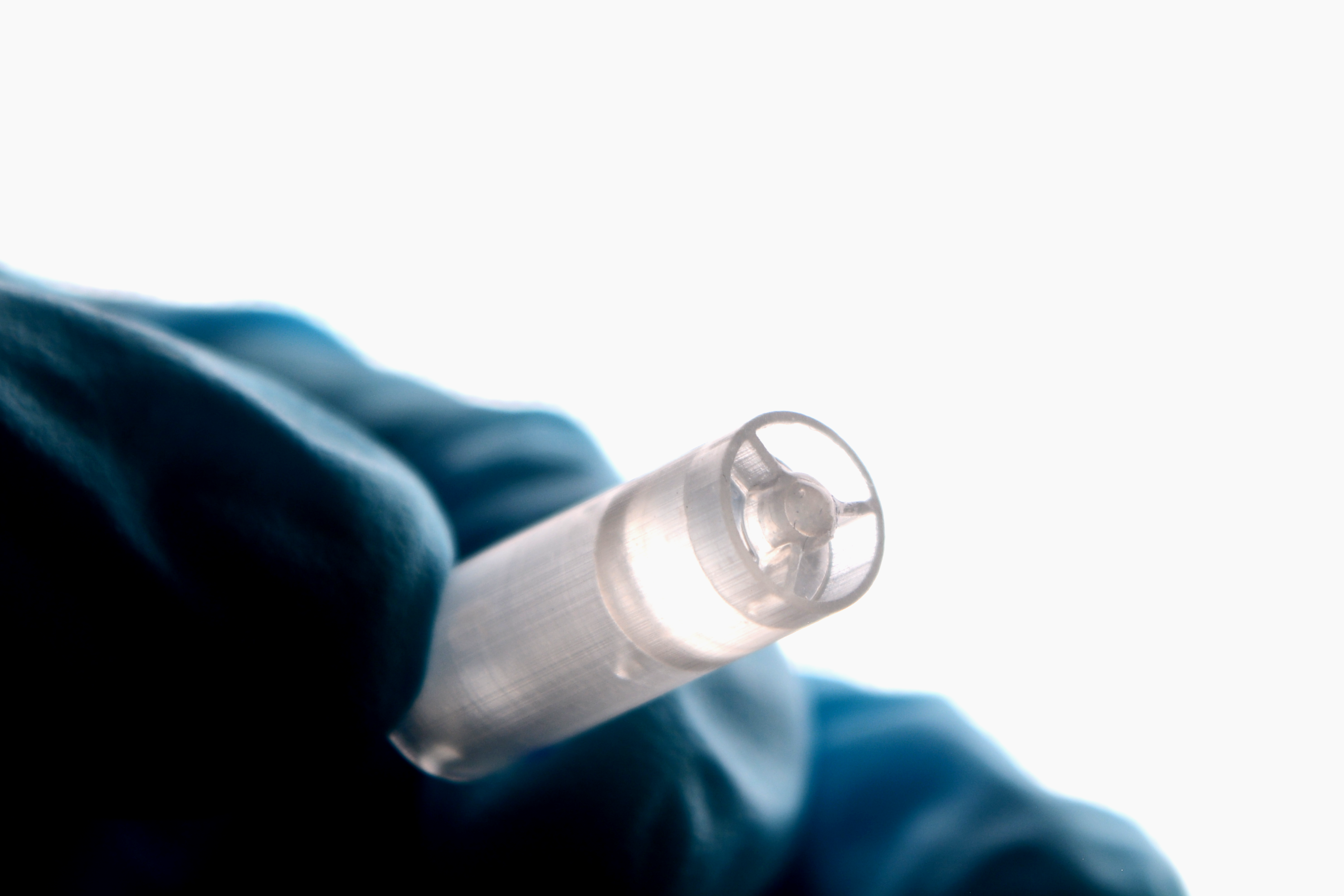
UroPro, ein MedTech-Start-up-Vorhaben des Lehrstuhls FAPS, schließt diese Lücke. Wir entwickeln eine minimalinvasive, intraurethrale Sphinkterprothese (Medizinprodukt Klasse IIb nach MDR). Das Herzstück bildet ein mechanisch-mikrofluidischer Tiefpass-Filter, der rein mechanisch zwischen transienten Druckspitzen und gewollter Miktion unterscheidet. Das Ventilmodul sitzt in einem dauerhaft verbleibenden Stent und wird prophylaktisch einmal im Jahr ambulant ausgetauscht. Zur Evaluation der Tragfähigkeit der Geschäftsidee sind evidenzbasierte Daten zur Marktakzeptanz sowie ein überlegenes gesundheitsökonomisches Profil notwendig.
Ziel der Arbeit:
Ziel dieser Masterarbeit ist die ganzheitliche Evaluation der Marktchancen von UroPro aus Endanwender- und Kostenträgerperspektive. Durch ein methodisch fundiertes Discrete Choice Experiment (DCE) wird die Zahlungs- und Nutzungsbereitschaft der Patienten quantifiziert. Die daraus abgeleiteten Marktdurchdringungsszenarien dienen als Basis für eine vergleichende Budget-Impact-Analyse (BIA). Die Ergebnisse synthetisieren eine Value-based Pricing-Strategie für die Erstattungspfade in der DACH-Region (Fokus auf GKV/NUB) und den USA (FDA De-Novo/CMS).
Konkrete Arbeitsinhalte:
- Grundlagenrecherche und methodische Konzeption
- Systematische Literaturrecherche zu den regulatorischen Rahmenbedingungen für Klasse-IIb-Implantate (MDR EU 2017/745, ISO 13485, ISO 14155) sowie den Anforderungen der US-amerikanischen FDA (De-Novo Pathway).
- Methodische Aufarbeitung der Best Practices zur Konzeption von Discrete Choice Experiments (DCE) im Gesundheitswesen zur Messung von Patientenpräferenzen.
- Analyse der methodischen Richtlinien zur Erstellung von Budget-Impact-Analysen im Kontext von Kostenträgern.
- Datenerhebung: Quantifizierung der Patientenpräferenzen
- Identifikation und Definition entscheidungsrelevanter Attribute für SUI-Patienten in Abgrenzung zum Wettbewerb.
- Design und Operationalisierung des DCE-Fragebogens.
- Durchführung der Datenerhebung an einer signifikanten Kohorte, differenziert nach Indikationen.
- Statistische Analyse und Gesundheitsökonomische Modellierung
- Ökonometrische und statistische Auswertung der DCE-Daten zur Ermittlung der relativen Wichtigkeit der Produktmerkmale und zur Simulation potenzieller Marktanteile.
- Entwicklung eines Budget-Impact-Modells: Gegenüberstellung der direkten und indirekten Kosten des Status quo mit UroPro.
- Ableitung der Marktzugangsstrategie
- Entwicklung eines Value-based Pricing-Modells basierend auf der berechneten Kostenträger-Entlastung.
- Gegenüberstellung und strategische Bewertung der Erstattungspfade: Selbstzahlermarkt (IGeL/PKV) und NUB-Verfahren (GKV) in Deutschland im Vergleich zum CMS-Erstattungssystem in den USA.
- Wissenschaftliche Dokumentation
- Strukturierte Verschriftlichung der Erkenntnisse mit klarem Fokus auf Lesbarkeit, Logik und Präzision, nach den Prinzipien wissenschaftlichen Schreibens.
- Transparente Dokumentation aller methodischen Limitationen, statistischen Unsicherheiten und Annahmen im ökonomischen Modell.
Weitere Informationen:
Bewerbung per E-Mail mit Lebenslauf und Notenübersicht.
Entwicklung lernbasierter Steuerungsansätze für tensegrity-inspirierte Kinematiken
Motivation
Tensegrity-inspirierte Kinematiken stellen einen vielversprechenden Ansatz für die Entwicklung innovativer robotischer Systeme dar. Aufgrund ihrer zugbasierten, flexiblen Struktur bieten sie Potenziale für leichte, anpassungsfähige und robuste mechanische Systeme. Insbesondere in Anwendungsfeldern, in denen Nachgiebigkeit, sichere Interaktion und effiziente Bewegungsabläufe von Bedeutung sind, gewinnen solche Kinematiken zunehmend an Relevanz.
Die Steuerung dieser Systeme ist jedoch mit besonderen Herausforderungen verbunden, da ihr Verhalten häufig nichtlinear, gekoppelt und nur eingeschränkt durch klassische modellbasierte Verfahren beschreibbar ist. Selbstlernende Algorithmen bieten hier die Möglichkeit, geeignete Steuerungsstrategien datenbasiert zu entwickeln und an komplexe Systemdynamiken anzupassen.
Ziel
Ziel der Abschlussarbeit ist die Untersuchung tensegrity-inspirierter Kinematiken im Hinblick auf ihre modellgestützte Beschreibung, simulationsbasierte Analyse und Steuerung mithilfe selbstlernender Algorithmen. Im Mittelpunkt steht die Frage, wie sich geeignete Lernverfahren zur Ansteuerung solcher Systeme einsetzen und bewerten lassen.
Schwerpunkte
- Einarbeitung in die Grundlagen tensegrity-inspirierter Kinematiken
- Modellierung und Simulation geeigneter Systeme
- Untersuchung selbstlernender Verfahren zur Steuerung
- Implementierung und Evaluation lernbasierter Algorithmen
- Analyse von Stabilität, Robustheit und Anpassungsfähigkeit des Systemverhaltens
Weitere Informationen
Infos auf Anfrage. Bewerbung per E-Mail mit Lebenslauf und Notenübersicht.
[BA/PA/MA] Datenbasierte Prozessmodellierung des induktiven Kompaktierens von HF-Litzen

Ausgangssituation:
Beim induktiven Kompaktieren primärisolierter Hochfrequenzlitzen (HF-Litzen) werden während des Prozesses umfangreiche Maschinen- und Induktionssystemdaten erfasst. Diese Daten enthalten potenziell die Information, mit der die resultierende Verbindungsqualität bereits während des Prozesses prädiziert werden kann, was eine Grundvoraussetzung für eine spätere Inline-Qualitätsüberwachung im industriellen Kontext darstellt.
Aus mehreren bereits abgeschlossenen Versuchsreihen am Lehrstuhl liegt ein umfangreicher Datenpool vor, dessen systematische Konsolidierung und Modellierung jedoch noch aussteht. Ziel der Arbeit ist es, aus diesen Bestandsdaten ein datenbasiertes Prozessmodell abzuleiten, das die Korrelation zwischen Prozesssignalen und Verbindungsqualität herstellt und damit die Basis für eine prozessbegleitende Qualitätsüberwachung schafft.
Der Umfang der Arbeit umfasst dabei folgende Arbeitsinhalte:
- Literaturrecherche
- Methoden der datenbasierten Prozessmodellierung in der Fügetechnik
- Signalbasierte Qualitätsprädiktion bei Fügeprozessen
- Datenkonsolidierung
- Sichtung und Vereinheitlichung der bestehenden Maschinen- und Induktionssystemdaten aus mehreren Versuchsreihen
- Bewertung der Datenqualität, Identifikation von Lücken und Inkonsistenzen
- Feature-Engineering und Modellentwicklung
- Extraktion prozessrelevanter Merkmale aus Kraft-Weg-Verläufen, Generatorleistungsdaten und Pyrometriesignalen
- Aufstellung statistischer und maschineller Lernmodelle zur Prädiktion von Kompaktierungsgrad, elektrischem Widerstand und Fehlprobenrate
- Validierung
- Bewertung der Modellgüte mittels Kreuzvalidierung und Hold-out-Analysen
- Identifikation der prädiktivsten Prozessmerkmale (Feature Importance)
- Bewertung & Dokumentation
- Erarbeitung eines Konzepts zur Inline-Anwendbarkeit der entwickelten Modelle
- Formulierung von Empfehlungen für eine spätere prozessbegleitende Qualitätsüberwachung
Voraussetzungen zur Bewerbung:
- Studiengang: Studium des Maschinenbaus, der Mechatronik, der Elektrotechnik, des Wirtschaftsingenieurwesens, IPEM, oder eines vergleichbaren technischen Studiengangs
- Fachkenntnisse: Sichere Programmierkenntnisse in Python; Grundlagen in Statistik und Datenanalyse; idealerweise erste Erfahrungen mit maschinellen Lernverfahren
- Arbeitsweise: Strukturierte, analytische und eigenständige Arbeitsweise; Bereitschaft, sich in domänenspezifische Prozessdaten und produktionstechnische Zusammenhänge einzuarbeiten
- Sprachkenntnisse: Gute Deutsch- oder Englischkenntnisse in Wort und Schrift
Bewerbungen mit Lebenslauf und aktuellem Notenspiegel bitte per E-Mail an: miriam.eichinger@faps.fau.de
[BA/PA/MA] Kontaktierung von primärisolierten HF-Litzen aus Aluminium mit maßgeschneiderten Kabelschuhen

Ausgangssituation:
Induktive Ladepads für elektrische Fahrzeuge erfordern hochzuverlässige und effiziente Kontaktierungen, insbesondere bei der Verwendung von primärisolierten HF-Litzen aus Aluminium. Aluminium bietet Vorteile wie geringes Gewicht und gute Leitfähigkeit, stellt jedoch besondere Anforderungen an die Kontaktierung aufgrund seiner Oxidationsanfälligkeit und mechanischen Eigenschaften. Ziel ist es, die Machbarkeit und Zuverlässigkeit der Kontaktierung zu demonstrieren.
Der Umfang der Arbeit umfasst dabei folgende Arbeitsinhalte:
-
Literaturrecherche: Untersuchung bestehender Kontaktierungstechniken für Aluminiumlitzen.
-
Konzeptentwicklung: Proof of Concept, der die Kontaktierung von HF-Litzen qualifiziert.
- Versuchsdurchführung: Testen der Kontaktierungen unter realistischen Bedingungen (z. B. Temperaturzyklen, Strombelastung) und Bewertung der elektrischen und mechanischen Stabilität.
-
Dokumentation: Auswertung der Ergebnisse und Erstellung einer detaillierten Dokumentation einschließlich Empfehlungen für die weitere Entwicklung.
Voraussetzungen zur Bewerbung:
-
Fachkenntnisse: Grundkenntnisse in Elektrotechnik und Materialwissenschaften, sowie Interesse an experimenteller Arbeit.
- Arbeitsweise: Selbstständige, strukturierte und präzise Arbeitsweise sowie Teamfähigkeit.
-
Sprachkenntnisse: Gute Deutschkenntnisse in Wort und Schrift; Englischkenntnisse sind von Vorteil für die Literaturrecherche.
Bewerbungen mit Lebenslauf und aktuellem Notenspiegel bitte per E-Mail an:
Sollten Sie in die engere Auswahl kommen, werden Sie per Mail kontaktiert. Ein Anruf ist nicht notwendig.
[BA/PA/MA] Optimierung des induktiven Kompaktierens von Aluminium-HF-Litzen durch alternative Werkzeuggeometrien und Beschichtungen
Ausgangssituation:
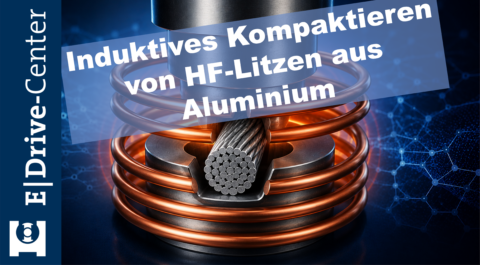
Das induktive Kompaktieren ist ein vielversprechendes Verfahren zur direkten, kontaktelementfreien Verbindung primärisolierter Hochfrequenzlitzen (HF-Litzen) für Anwendungen wie induktive Ladepads und elektrische Antriebe. Durch das Zusammenspiel aus induktiver Werkzeugerwärmung und mechanischem Verpressen wird die Litze form- und teilweise stoffschlüssig kompaktiert und dabei zugleich die Primärisolation thermisch entfernt.
Während für Prozess für Kupferlitzen bereits ein erster Proof-of-Concept vorliegt, treten bei Aluminiumlitzen werkzeugseitige Herausforderungen auf, insbesondere starke Adhäsionseffekte am Werkzeug, ungleichmäßige Gratbildung und eine erhöhte Fehlprobenrate. Erste Untersuchungen am Lehrstuhl haben gezeigt, dass alternative Werkzeuggeometrien sowie Hartstoffbeschichtungen für Kupferlitzen deutliche Prozessverbesserungen bewirken. Die Übertragung dieser Erkenntnisse auf Aluminium und die Ableitung einer robusten Prozessauslegung für Al-HF-Litzen stehen aus.
Der Umfang der Arbeit umfasst dabei folgende Arbeitsinhalte:
- Literaturrecherche
- Werkzeugbeschichtungen für Umform- und Fügeprozesse mit Aluminium
- Stand der Forschung zum Kontaktieren von HF-Litzen
- Versuchsplanung
- Konzeption einer Versuchsmatrix für alternative Werkzeuggeometrien und Hartstoffbeschichtungen
- Festlegung des Parameterraums und der Bewertungskriterien
- Versuchsdurchführung
- Systematische Kompaktierversuche an Aluminium-HF-Litze am bestehenden Versuchsstand
- Metallographische Probenpräparation und Dokumentation des Werkzeugzustands
- Auswertung
- Quantifizierung von Kompaktierungsgrad, elektrischem Widerstand und Fehlprobenrate mittels Lichtmikroskopie, 3D-Laserscanning-Mikroskopie und Vierleitermessung
- Statistische Auswertung der Versuchsergebnisse
- Bewertung & Dokumentation
- Vergleichende Bewertung der untersuchten Werkzeugkombinationen
- Ableitung einer Best-Practice-Empfehlung für die weiterführende Verfahrensentwicklung
Voraussetzungen zur Bewerbung:
- Studiengang: Studium des Maschinenbaus, der Mechatronik, des Wirtschaftsingenieurwesens, IPEM oder eines vergleichbaren technischen Studiengangs
- Fachkenntnisse: Grundkenntnisse in Werkstoffkunde und Fertigungstechnik; Interesse an experimenteller Laborarbeit und metallographischer Probenpräparation
- Arbeitsweise: Strukturierte, sorgfältige und eigenständige Arbeitsweise; Bereitschaft, sich in metallographische Probenpräparations- und Auswertungsmethoden einzuarbeiten
- Sprachkenntnisse: Gute Deutschkenntnisse in Wort und Schrift
Bewerbungen mit Lebenslauf und aktuellem Notenspiegel bitte per E-Mail an: miriam.eichinger@faps.fau.de
Ausschreibung: Wassermelonen-Reifegrad-Detektor
Entwicklung eines portablen Wassermelonen-Reifegrad-Detektors
Der Reifegrad einer Wassermelone beeinflusst die Ausbreitung elektromagnetischer und akustischer Wellen durch die Frucht. Ziel dieser Arbeit ist es, diesen Effekt messtechnisch zu erfassen und für eine automatisierte Reifegradbewertung nutzbar zu machen.
Aufgabenstellung
- Literaturrecherche: Recherche und Vergleich bestehender Messverfahren zur Reifegradbewertung (z. B. auf Basis von Schallwellen, Ultraschall oder elektromagnetischen Wellen). Auswahl und Begründung eines geeigneten Ansatzes.
- Hardwareentwicklung: Aufbau eines handlichen Prototyps auf Basis von Mikrocontrollern (z. B. Arduino Uno, ESP32), der von einer Person bedient werden kann. Das Ganze soll zumindest unter Laborbedingungen Mehrheitlich korrekte Ergebnisse liefern.
- Datenerhebung: Systematische Messdatenerfassung auf einem Kooperationsbetrieb (Landwirtschaft) über verschiedene Reifegrade hinweg. Aufbau eines eigenen, annotierten Datensatzes. In diesem Kooperationsbetrieb ist die Arbeitssprache Deutsch, das heißt Sie müssen UNBEDINGT flüssiges Deutsch beherrschen.
- Algorithmik: Training und Validierung geeigneter Klassifikationsalgorithmen (z. B. Machine Learning, Signalverarbeitung) anhand des selbst erhobenen Datensatzes. Integration in den Prototyp.
- Weitere Literatur: Hier finden Sie erste Informationen zu möglichen Ansätzen
Voraussetzungen
- Immatrikulation an der FAU (Bachelor oder Master)
- Sehr gute Deutschkenntnisse (Arbeitssprache ist Deutsch)
- Praktische Erfahrung mit Mikrocontrollern/Sensoren bevorzugt (Arduino, ESP32 oder vergleichbar)
- Grundkenntnisse in Programmierung bevorzugt (C++ und/oder Python)
- Freude an eigenständiger, experimenteller Arbeit
- Bereitschaft, mehrere Male zum Kooperationsunternehmen nach Unterfranken zu Reisen (Erreichbar mit Deutschlandticket)
Was wir bieten
- Zugang zu Werkstatt und Laborinfrastruktur am Institut FAPS
- Kooperation mit einem landwirtschaftlichen Betrieb für die Feldversuche
- Betreuung durch wissenschaftliche Mitarbeiter des Lehrstuhls
- Ein praxisnahes, interdisziplinäres Thema mit direktem Anwendungsbezug
- Ausreichende Finanzierung um Prototypen und Sensortechnik anzuschaffen.
Bitte senden Sie Ihren Lebenslauf, Ihr Zeugnis ihres aktuell höchsten bereits erreichten Bildungsgrads, sowie eine aktuelle Notenübersicht ihres aktuellen Studiums. Bitte senden Sie KEIN eigenes Anschreiben als Dokument, sondern erläutern Sie in Ihrem E-Mail-Anschreiben kurz und knapp ihre Motivation.
Intelligente Prozessoptimierung beim Richten von Flachdraht für elektrische Antriebe [BA/PA/MA]
Hintergrund
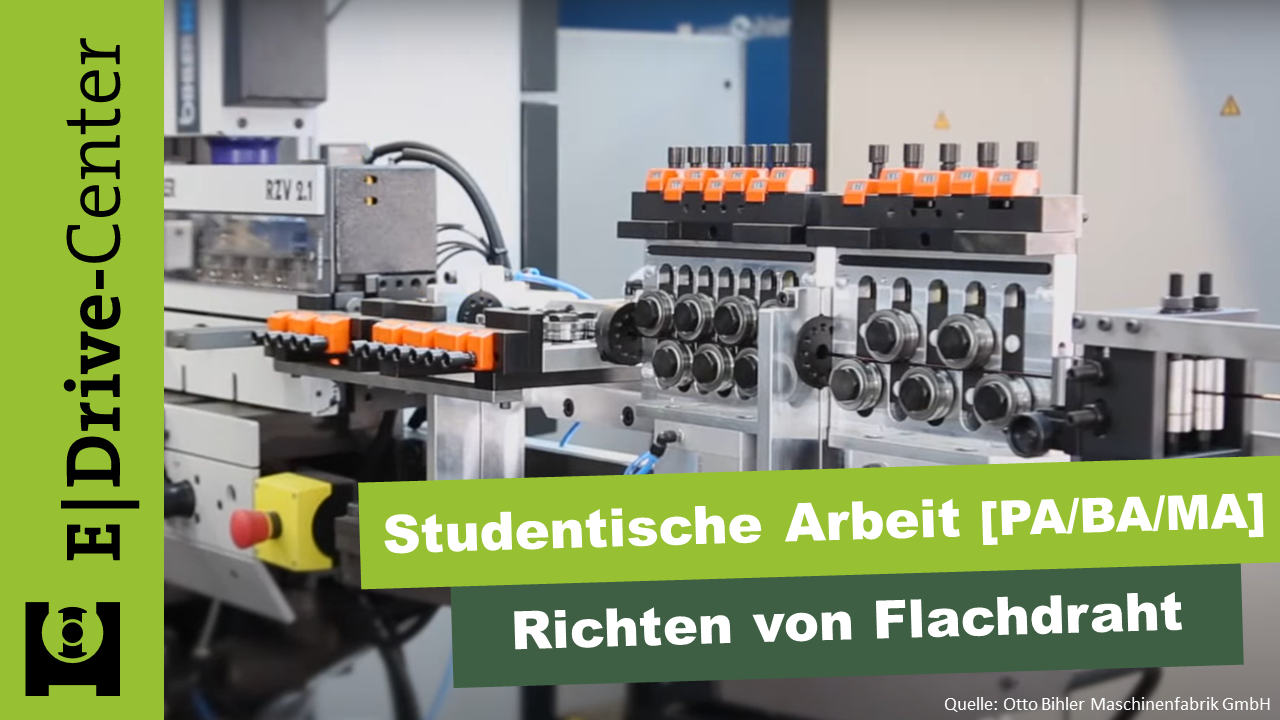
Die Fertigung elektrischer Antriebe, wie etwa Hairpin-, Continuous-Hairpin- oder Axialflussmaschinen, erfordert eine präzise Kontrolle von Material und Prozess. Ein zentraler Schritt ist das Richten von Flachdraht, das bislang auf festen Parametern und Erfahrungswissen basiert. Dabei werden Schwankungen im Material nur unzureichend berücksichtigt. Das Ziel besteht darin, diesen Prozess mithilfe moderner Sensorik, Messtechnik und innovativer Regelungsansätze weiterzuentwickeln, um die Produktionsqualität effizient zu steigern.
Mögliche Aufgabenstellungen
Studentische Arbeiten können zu einem der folgenden Themen erarbeitet werden:
- Integration eines Interferometers zur Isolationsschichtdickenmessung
- Modellierung und Simulation des Richtprozesses
- Weiterentwicklung einer flexiblen, mechanischen Abisolierstation für Flachdraht
- SPS-Programmierung einer Schwenkbiege-Anlage zum 2D-Biegen von Flachdraht
Die detaillierten Inhalte und Aufgabenstellungen werden in einem persönlichen Gespräch besprochen.
Anforderungsprofil
- Interesse an der Produktion elektrischer Traktionsantriebe
- Je nach Themengebiet sind Grundkenntnisse in Konstruktion, Messtechnik, Programmierung, Datenanalyse (KI/ML) oder Regelungstechnik erforderlich.
- Freude an praktischer Arbeit (Versuchsreihen, Messtechnik, Anlagenaufbau)
- Analytisches, strukturiertes und selbstständiges Arbeiten
- Teamfähigkeit und Kommunikationsstärke
- Gute Deutsch- und Englischkenntnisse in Wort und Schrift
Bewerbung
Bitte senden Sie Ihre Bewerbung mit
- Lebenslauf
- Aktuellem Notenspiegel
- Angabe der bevorzugten Aufgabenstellung
per E-Mail an anja.preitschaft@faps.fau.de
Wichtig: Bewerbungen ohne konkrete Nennung eines Themenbereichs können leider nicht bearbeitet werden.
[MA] Simulation einer Automatisierung zur Blechverarbeitung im Transformatorenbau

Siemens Energy bietet aktuell eine Masterarbeit zur Analyse und Simulation einer Automatisierungslösung für die Blechbearbeitung zur Optimierung von Prozessen und Qualität an. Die Arbeit wird im Werk für Großtransformatoren in Nürnberg durchgeführt. Weitere Informationen unter:
https://jobs.siemens-energy.com/en_US/jobs/FolderDetail/292057
MA/PA: Simulation of Microexpressions for Human-Robot Interaction

We are looking for curious and motivated master’s students to join an innovative research project on the simulation of microexpressions in virtual human faces for humanoid robotics and human-robot interaction. This thesis combines social robotics, facial expression modeling, computer animation, and user-centered evaluation, contributing to the development of more expressive and socially intelligent virtual agents.
Project Overview:
This master’s thesis focuses on the simulation and evaluation of human microexpressions in virtual faces and computer-based environments. Microexpressions are subtle and short facial movements that play an important role in social communication. The aim of this thesis is to investigate how such expressions can be modeled, implemented, and perceived in virtual humans or simulated humanoid agents.
Possible research directions include:
- Study of the physiological and expressive basis of human microexpressions
- Investigation of methods for modeling subtle facial expressions in virtual agents
- Simulation of microexpressions using animation and facial modeling tools such as Blender, Unity, Unreal Engine / MetaHuman, or related frameworks
- Exploration of facial action units, blendshapes, or similar techniques for implementing subtle facial movements
- Evaluation of user preferences and perception regarding realism, naturalness, and social acceptability
The thesis will help establish a foundation for future emotionally expressive virtual humans and humanoid robots by identifying suitable design approaches and perception-related challenges.
Key Responsibilities:
- Conduct a structured review of literature on microexpressions, facial expression modeling, and human-robot interaction
- Investigate existing methods and tools for simulating subtle facial expressions in virtual environments
- Implement or prototype selected microexpression simulation approaches in a computer-based setting
- Design and analyze a user study to evaluate perceived realism, preference, and social impact
Who We’re Looking For:
- Strong interest in social robotics, virtual humans, humanoid robots, human expression, or human-robot interaction
- Background in robotics, biomedical engineering, computer science, HRI, computer graphics, animation, or a related field
- Interest in simulation, experimental design, and user-centered evaluation
- Independent, structured, and critical way of working
- Fluency in English
How to Apply:
If you are excited about expressive virtual humans and would like to contribute to research on artificial facial behavior, we invite you to apply exclusively via email, including your CV and complete transcript of records (GPA min. 2.5).
Subject: S2.1_Virtual Microexpressions
[BA/PA/MA] AI-gestützte Erkennung elektrischer Prüfpunkte in Schaltschränken
Motivation
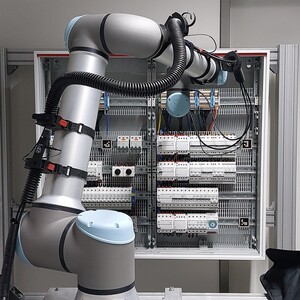
Im Rahmen des Forschungsprojekts „ProTekt“ am FAPS arbeiten wir an der Automatisierung der Qualitätsprüfung von Schaltschränken. Ein wichtiger Baustein dabei ist die elektrische Prüfung. Damit ein Roboter elektrische Messungen automatisiert durchführen kann, müssen die passenden Prüfpunkte an den verbauten Komponenten zuverlässig erkannt und lokalisiert werden. Prüfpunkte sind die elektrischen Kontaktstellen an den Komponenten, über die einzelne Anschlüsse elektrisch ankontaktiert werden können. In der Praxis ist ihre Erkennung jedoch herausfordernd: Form, Lage, Größe und visuelle Erscheinung variieren stark zwischen unterschiedlichen Herstellern, Komponentenarten und Schaltschrankaufbauten.
Ziel der Arbeit
Ziel deiner Arbeit ist es, ein leichtgewichtiges Computer-Vision-Verfahren zur robusten Erkennung von Prüfpunkten zu entwickeln, zu bewerten und prototypisch umzusetzen. Im Zentrum steht dabei ein CNN-basiertes Modell, das Prüfpunkte als eigene Objektklasse erkennt und auch bei hoher Varianz der Komponenten zuverlässig funktioniert.
Dazu gehört insbesondere:
- Einarbeitung in den Projektkontext und die Rolle elektrischer Prüfpunkte in der automatisierten Schaltschrankprüfung
- Analyse vorhandener Bilddaten sowie Einbezug und Bewertung geeigneter Online-Datensätze für Training und Validierung
- Optional: Anpassung einer bestehenden Pipeline zur Erzeugung synthetischer Daten, sodass diese auch für Prüfpunkte genutzt werden kann
- Entwicklung eines leichtgewichtigen CNN-basierten Ansatzes zur Detektion
- Untersuchung, welche Merkmale und Datenrepräsentationen für eine robuste Generalisierung über viele Komponenten hinweg geeignet sind
- Entwicklung einer geeigneten Methodik, um die Robustheit des Systems bei hoher Varianz nachvollziehbar nachzuweisen
- Durchführung einer sinnvollen Evaluierung mit unterschiedlichen Komponentenklassen, Ausprägungen und Schwierigkeitsgraden
Ziel ist ein Prüfpunkt-Detektionssystem, das nicht nur auf wenigen Einzelbeispielen funktioniert, sondern seine Robustheit auch über eine große Bandbreite realer Komponenten hinweg nachvollziehbar zeigt.
Anforderungen an den Studierenden
- Studium im Bereich Maschinenbau, Mechatronik, Wirtschaftsingenieurwesen oder vergleichbar
- Interesse an Computer Vision, Deep Learning und praxisnaher AI-Anwendung
- Erste Programmierkenntnisse, vorzugsweise in Python
- Selbstständige und strukturierte Arbeitsweise
- Sehr gute Deutsch oder Englisch Kenntnisse
Bewerbungen bitte per Mail mit Lebenslauf und aktuellem Notenspiegel an matthias.lang@faps.fau.de
Start: jederzeit möglich
Ort: Nürnberg am FAPS Standort „auf AEG“ – hybrid möglich